Roof Repair in Gainesville, FL — Same-Day Inspections, Honest Estimates
A small roof problem in Gainesville rarely stays small. One cracked flashing joint or lifted shingle edge gives water a way in. By the time a ceiling stain appears, moisture has already traveled through underlayment, decking, and insulation above it.
Roof repair in Gainesville, FL is about timing. Early action keeps the fix simple and the cost low. Waiting turns a minor issue into structural damage that costs far more.
Stop the Leak Before It Spreads.
Most calls we see start the same way — a leak after a storm, shingles in the yard after wind, or water dripping near a vent. Homes near Haile Plantation and NW Gainesville face this after heavy summer storms. Properties around Newberry and Archer deal with stronger wind exposure, which lifts shingle edges and breaks seal lines faster.
A proper roof repair does more than cover the visible problem. It traces where water enters, checks the surrounding roofing system, and fixes the cause so it does not return in the next storm. Surface patching alone does not hold up against Florida heat and humidity.
Emergency Roof Repairs When You Need Them Most
Roof damage in Gainesville shows up without warning. A storm rolls through in the afternoon. Wind lifts shingles. Rain pushes through a weakened seal line. By nightfall, water is already moving inside your home.
Emergency roof repair focuses on fast control. Stop active water entry first. Prevent hidden damage from spreading second.
Most urgent calls involve active leaks, storm damage, or debris impact. Homes near Tioga and Newberry see wind-driven rain that forces water under shingle edges. In NW Gainesville, older roofs near tree cover often take branch hits during summer storms.
Water does not stay where it enters. It travels along decking, rafters, and insulation before showing up on a ceiling. That small stain often signals a larger problem above it.
A proper emergency response covers three things:
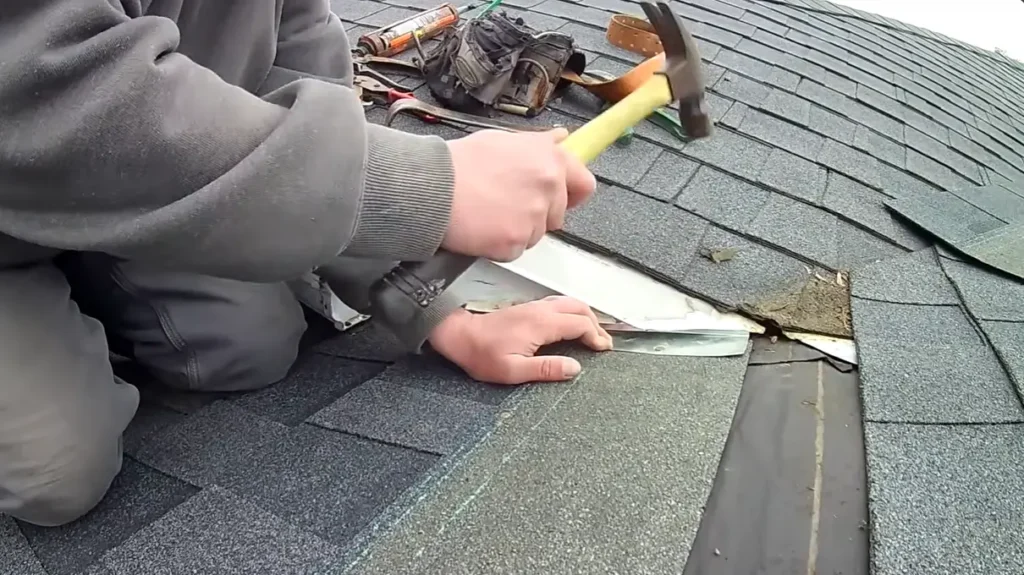
- Immediate water control. Temporary sealing or tarping stops further intrusion. This protects ceilings, walls, and wiring until conditions allow a permanent fix.
- Damage tracing. The visible drip is rarely where water enters. We trace it back to the actual breach — flashing, a valley, or a pipe penetration.
- System stabilization. Loose shingles, exposed underlayment, and lifted metal panels need to be secured before the next weather event hits.
Florida humidity speeds up mold growth once moisture gets trapped. Within 24 to 48 hours, damp insulation and wood begin to break down. Same-day roof repair matters here more than in most states.
Storm damage also connects to insurance. If wind or falling debris caused the problem, document it right away with photos and notes. Early documentation prevents disputes and protects your claim.
Residential and Commercial Roof Repairs in Gainesville FL
Every roof system fails differently. Repair work needs to match the material, the structure, and local conditions.
Shingle Roof Repair
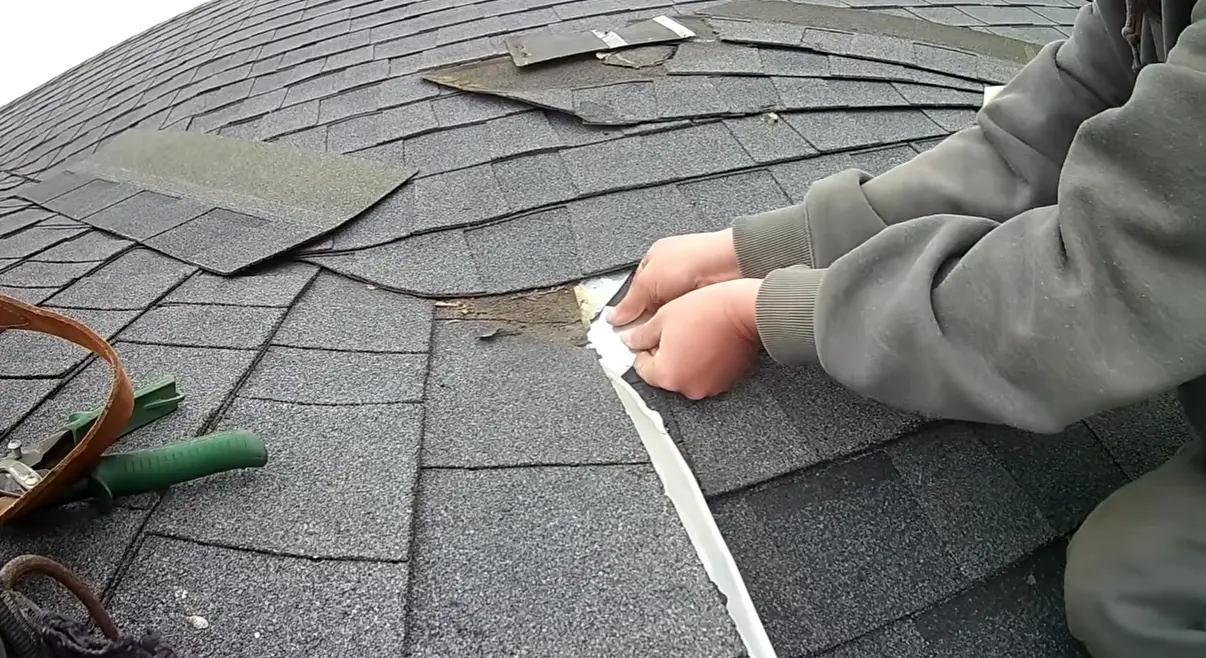
Most homes in NW Gainesville and Haile Plantation use asphalt shingles. These roofs fail first at seal lines, flashing points, and ridge caps. Common problems include lifted or missing shingles after wind, granule loss from UV exposure, dried sealant around vents, and nail pops that loosen shingle placement. Replacing shingles correctly means matching existing material, sealing properly, and restoring water flow across the surface. A poorly executed shingle repair becomes the next leak point.
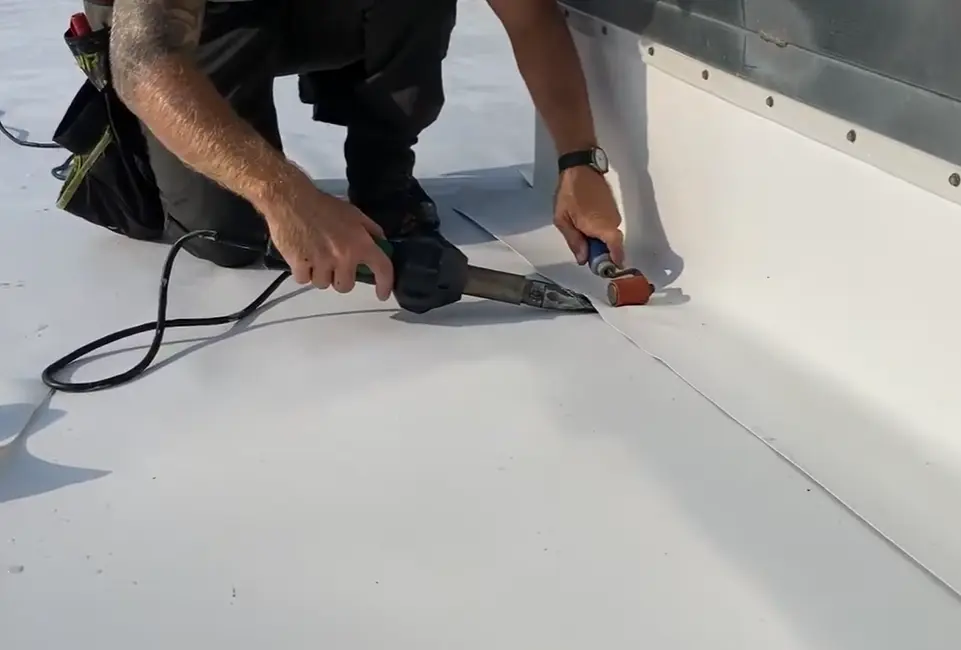
Metal Roof Repair
Metal roofs behave differently under Florida conditions. Daily heat cycles cause panels to expand and contract. Over time, this loosens fasteners and opens small seam gaps. In exposed areas like Newberry and Tioga, wear happens faster. Typical repairs include replacing backed-out fasteners, sealing open seams, fixing flashing around penetrations, and addressing panel damage from debris. A correct metal repair keeps the system watertight while allowing natural movement.
Flat and Low-Slope Roof Repair
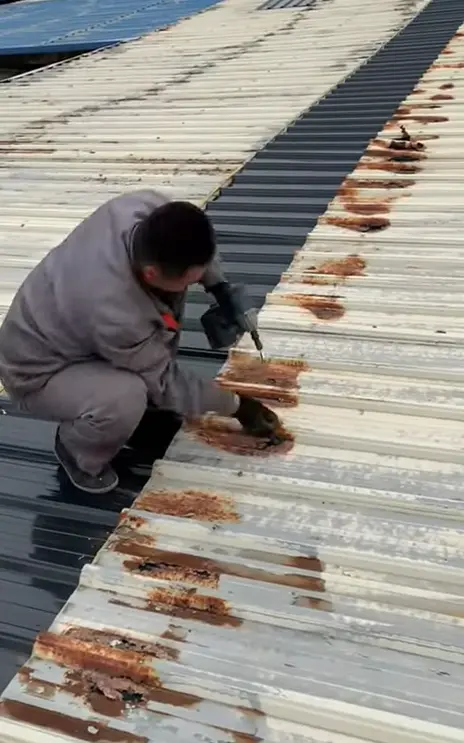
Commercial buildings and some residential additions use low-slope systems. Heavy Gainesville rain exposes weak drainage points quickly. Ponding water becomes the primary failure mode. Repairs focus on membrane patching, seam resealing, drainage correction, and fixing areas where water pools. Buildings near the University of Florida campus and older properties around Alachua County commonly need this work.
How to Know if You Need Roof Repair or Replacement
This is the first question most Gainesville homeowners ask. The answer depends on how far the damage has spread.
Roof repair works when the problem stays in one area. A single leak, a few missing shingles, or a flashing failure around one vent — these are repair scenarios. When the rest of the roofing system still performs correctly, a targeted repair extends life and prevents larger damage.
Replacement becomes the right call when damage shows up in multiple areas, when repairs keep failing within months of each other, or when age has weakened the entire system. In North Central Florida, asphalt shingles lose seal strength and flexibility after years of UV exposure and humidity cycles. At that point, repairs stop lasting.
Cost plays a role too. A targeted repair costs less upfront. But repeated repairs over two to three years can exceed what a full replacement would have cost. An inspection confirms which direction saves more over time.
Most Common Roof Problems in Gainesville Homes
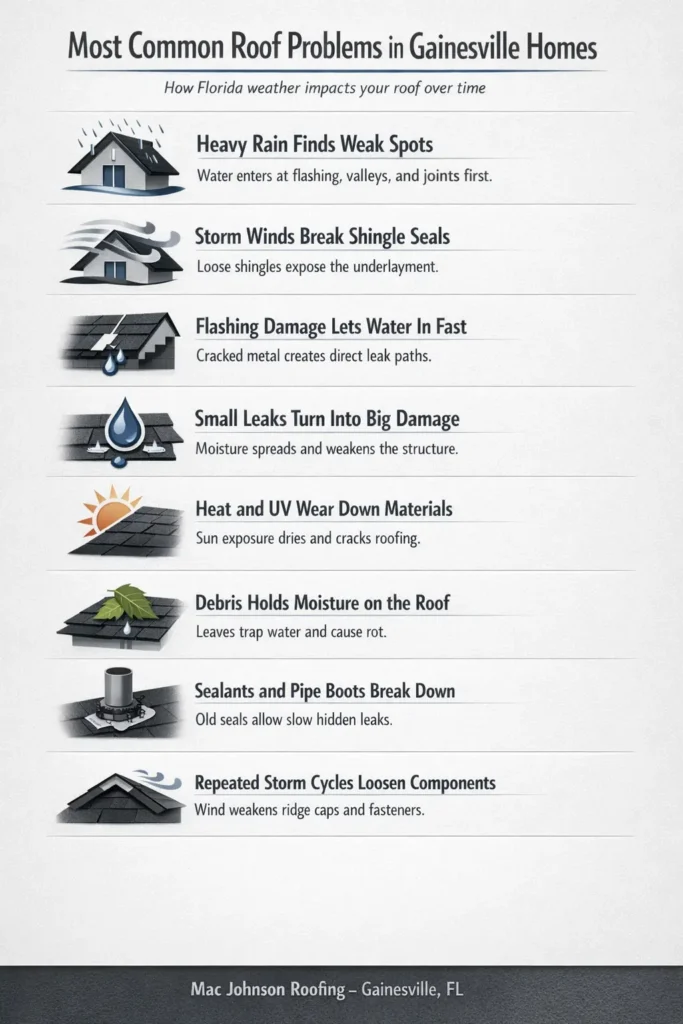
Gainesville roof failures follow consistent patterns shaped by local weather and building age.
Roof leaks are the most common call. They start at flashing around chimneys and vents, in valleys where two roof planes meet, or at pipe boot seals. These connection points absorb the most stress during rain.
Missing or lifted shingles follow closely. Wind events during storm season break seal lines and expose underlayment. Homes in open areas like Archer and High Springs see this more often than sheltered properties in the city.
Flashing failure causes some of the most damaging leaks. Once metal flashing at a chimney or roof transition cracks or pulls away, water enters directly and moves fast through the system.
Rotted decking appears when leaks go untreated. Moisture weakens plywood over time and creates soft spots that spread. Homes in Micanopy and tree-covered neighborhoods see this more frequently due to debris buildup holding moisture against the surface.
Other common issues include granule loss from intense UV exposure, loose ridge caps after repeated wind cycles, sealant breakdown around pipe boots, and fastener failures on metal roofs. Most start small. Florida heat and humidity accelerate deterioration once water gets inside.
DIY vs Professional Roof Repair – What You Should Know
Many homeowners ask whether they can fix a leaking roof themselves. For clearing debris or spotting visible surface damage, basic maintenance is reasonable. For actual leak repairs, the answer is almost always no.
The hardest part of roof repair is not applying the patch. It is finding the true entry point. Water rarely enters where it appears. It travels along decking and rafters before showing up on a ceiling. DIY repairs almost always miss the actual source and the leak returns.
Safety is a real concern. Sloped roofs with wet surfaces and loose materials create serious fall risk. Professional repairs also require moisture detection tools, sealing materials rated for Florida heat, and the ability to match existing roofing materials correctly. Improper sealing traps moisture inside the system, which leads to mold and wood rot that cost far more to correct later.
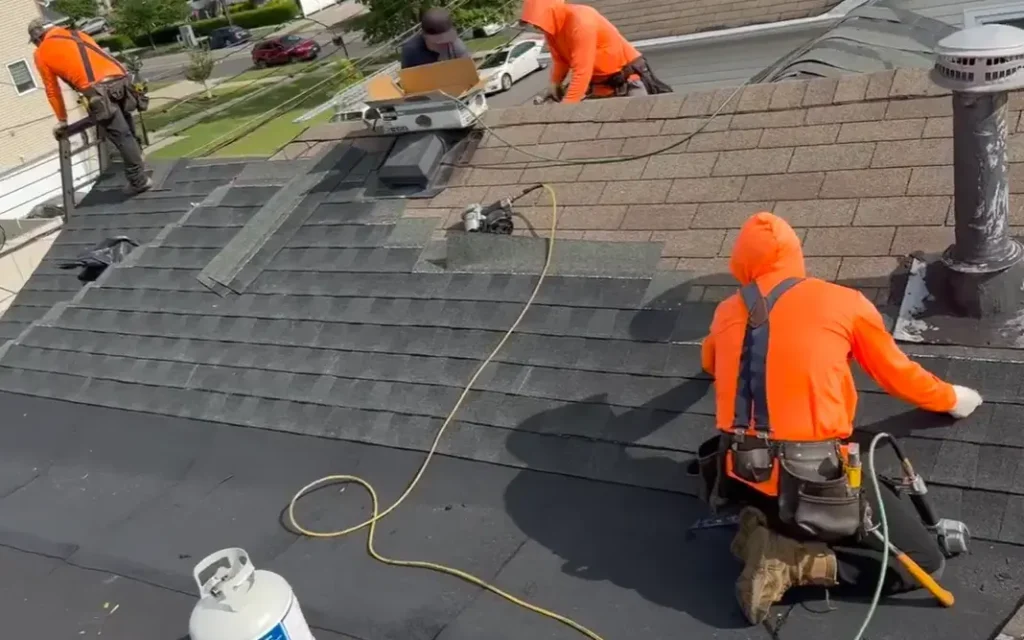
Our Roof Repair Process – Quick, Transparent, Reliable
Roof repair should feel clear from your first call to the finished job. You deserve to know what is wrong, what the fix involves, and what it will cost before work begins.
Detailed Roof Assessment
Every repair starts with a close inspection of the damaged area and the surrounding system. We check shingles, flashing, seal points, and visible underlayment. We also look for moisture in the roof deck and signs of hidden damage in the attic space. The key question at this stage is where water actually enters — not where it appears inside your home. Homes near NW Gainesville often show UV wear on shingles. Properties in Micanopy and wooded corridors tend to have moisture issues from debris accumulation in valleys and gutters.
Immediate Protection When Needed
If the roof is actively leaking, we stabilize it first. Temporary sealing or tarping stops water from getting further inside. During storm season, this step matters because rain can return within hours.
Targeted Repair Work
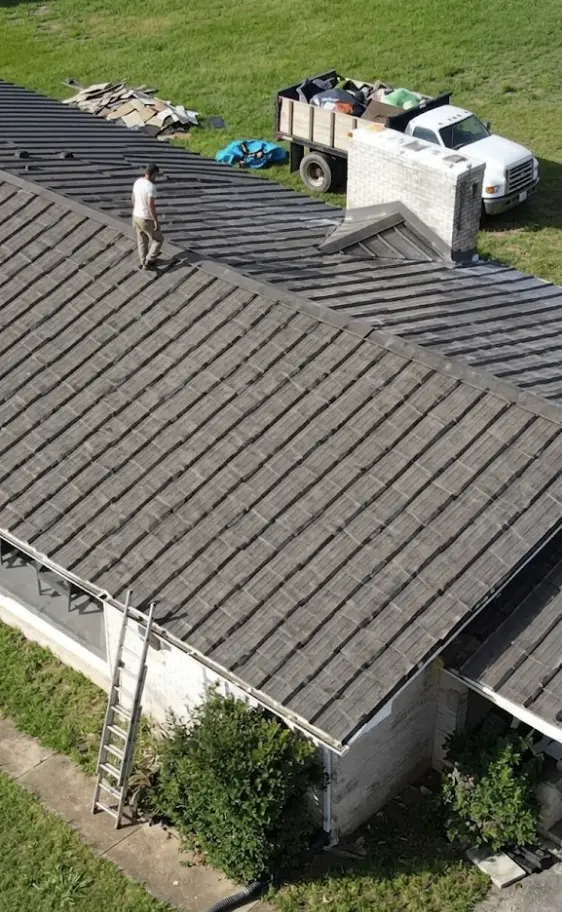
Once the roof is stable, the permanent repair begins. Depending on the issue, this may involve replacing damaged shingles, resealing flashing, fixing vent penetrations, or repairing sections of the roof deck. Every repair matches the material type and condition of the existing roof. Metal repairs focus on fasteners and seam integrity. Low-slope repairs address membrane condition and drainage. Shingle repairs restore surface protection and correct water flow.
Post-Repair Verification
After the repair, we confirm that water flows correctly across the surface and away from vulnerable areas. Seal points are tested and surrounding materials are checked for stability. This final step reduces the chance of repeat issues after the next storm.
Most repairs in Gainesville take a few hours to one full day. More complex situations involving decking damage or multiple leak sources may take longer. Acting early keeps both the timeline and the cost shorter.
Why Gainesville Homeowners Trust Mac Johnson Roofing
Choosing the right roofing contractor comes down to one thing. You need the problem fixed correctly the first time.
Mac Johnson Roofing focuses on repairs that solve real causes, not quick patches that fail in the next weather event. Every repair reflects actual roof condition confirmed through inspection — not assumptions made from the ground.
Work meets Florida standards for sealing, materials, and water management. Insurance-related repairs receive proper documentation, which protects your claim and prevents delays with adjusters.
Local knowledge matters here. Alachua County roofs face a specific combination of heat, humidity, and storm frequency that demands a different approach than most regions. Archer properties see stronger wind exposure. High Springs homes deal with open sun and faster UV wear. Neighborhoods near heavy tree cover face debris buildup and persistent moisture in valleys and gutters.
Understanding these patterns allows repair work to last longer under real Florida conditions. Homeowners also deserve to know what was fixed, why it failed, and how long the repair should hold. That transparency builds trust and prevents repeat calls.
FAQs – Your Top Roof Repair Questions Answered
Get a Free Roof Repair Estimate in Gainesville Today
Roof problems get worse in Florida heat. Moisture spreads quickly once it passes the surface layer. Insulation, decking, and ceilings take damage fast — and costs grow with every passing week.
If you see a leak, missing shingles, or any sign of wear, acting now keeps the repair simple and your costs lower. A targeted roof repair in Gainesville, FL stops damage before it reaches structural components.
Mac Johnson Roofing gives you a clear assessment, an honest recommendation, and a straightforward estimate. No pressure. No upselling. Just real answers about what your roof actually needs.
Same-day inspections are available for urgent situations. Emergency calls are handled quickly to secure your home before the next storm.
Call or text (619) 776-0755 to schedule your free estimate. Submit your details online for non-urgent situations and we will respond quickly.
Contact Mac Johnson Roofing
Phone: (619) 776-0755
Location: 4401 NW 25th Pl, Suite L Gainesville, FL 32606
Hours: Monday through Friday, 7:00 AM to 4:00 PM
Walk-in visits welcome at our Gainesville showroom. Meet the team, see material options, and get honest answers before you commit to anything.